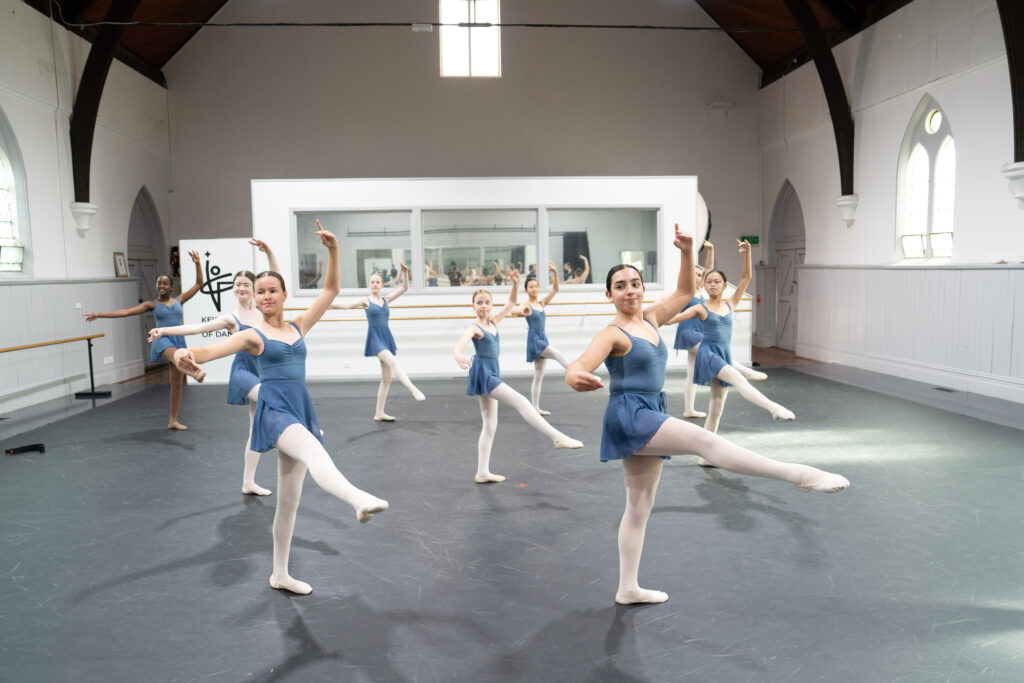
Ballet provides a shared movement system that helps dancers understand how their bodies work, how movement connects, and how skills transfer across styles. Ballet at Kew School of Dance is not treated as a separate or optional subject. It is the framework that supports learning across all styles taught at the school.
Whether students are enroled in ballet, jazz, contemporary, tap, or musical theatre, ballet training plays a key role in how classes are structured and how dancers progress over time. The goal is not to turn every dancer into a classical ballerina, but to give them the tools they need to move well in any style they choose.
Ballet Creates a Shared Movement Language
One of the main reasons ballet sits at the centre of dance training is that it creates a common movement language. Ballet terminology and technique are used across many styles, even when the final movement looks very different. Words like plié, turnout, alignment, and balance appear in many dance classes because they describe how the body should move safely and clearly.
At Kew School of Dance, this shared language helps students move between classes with confidence. A dancer who understands basic ballet concepts can follow instructions more easily in jazz or contemporary classes because the same ideas apply. This consistency supports smoother learning and helps dancers progress without confusion.
Ballet Shapes How Other Classes Are Taught
Ballet does not exist in isolation at Kew School of Dance. It directly influences how other classes are planned and delivered. Teachers use ballet-based principles to guide posture, foot placement, and control, even in styles that are more energetic or expressive.
For example, a jazz class may focus on sharp movement and rhythm, but the control behind those movements comes from ballet training. A contemporary class may explore freedom and flow, but the strength and balance needed for that freedom are built through ballet. By using ballet as a reference point, teachers help students develop consistency across styles.
Ballet Supports Clear Progression Pathways
Dance training works best when students follow a clear progression. Ballet provides structure that allows this progression to happen in a steady and organised way. Skills are introduced gradually, then built upon as dancers grow in ability and understanding.
Ballet helps guide decisions about class levels and readiness. Teachers can assess posture, control, and coordination through ballet-based exercises, which help determine when a student is ready to move forward. This approach supports safe development and avoids pushing dancers into advanced material before they are prepared.
Ballet Helps Teachers Identify Technical Gaps
Because ballet focuses so strongly on technique, it allows teachers to see where a dancer may need support clearly. Issues with balance, strength, or coordination often become visible during ballet work, even if they are less noticeable in faster or more expressive styles.
This clarity helps Kew School of Dance teachers provide targeted guidance. By addressing technical gaps through ballet training, students are better prepared to improve across all their classes. This approach supports long-term development rather than short-term performance.
Ballet Encourages Consistency Across Styles
One challenge dancers face when training in multiple styles is adjusting to different movement expectations across styles. Ballet helps create consistency by teaching dancers how to organise their bodies regardless of style.
Ballet acts as an anchor. It reminds students of the basics, even when choreography changes. This consistency helps dancers maintain quality movement, whether they are performing a lyrical routine or a fast-paced jazz combination.
Ballet Builds a Strong Technical Base Without Limiting Style
A common concern is that ballet may restrict creativity or make dancers too rigid. At Kew School of Dance, ballet is used as a foundation, not a limitation. The technical base ballet provides allows dancers to explore other styles more freely because they understand how to control their bodies.
When dancers feel secure in their technique, they are more confident in taking creative risks. Ballet gives them the stability needed to experiment safely and effectively in other styles.
Ballet Supports Long-Term Dance Training
Dance is not learned in a single year. It is a long-term process that changes as dancers grow physically and mentally. Ballet provides continuity throughout this journey. Skills learned early continue to support dancers as training becomes more complex.
Ballet helps students build habits that support long-term involvement in dance. These habits include careful movement, attention to detail, and respect for the learning process. These qualities benefit dancers regardless of how far they choose to take their training.
Ballet Connects All Dance Styles at Kew School of Dance
Rather than separating styles, ballet helps connect them. It allows students to see how different dance forms relate to one another. This understanding supports confidence and adaptability.
Ballet is not positioned as more important than other styles, but as the common ground that supports them all. This approach helps students feel supported as they explore different interests while maintaining strong technical foundations.
Conclusion
Ballet is the foundation of all dance styles because it provides structure, consistency, and shared understanding across training. At Kew School of Dance, ballet supports how classes are taught, how students progress, and how skills transfer between styles. It is a practical tool that strengthens all areas of dance education.
Kew School of Dance uses ballet as a central part of its training approach to support safe, steady, and confident development for every student. To learn more about our programs or how ballet fits into our wider dance training, contact us at 03 9123 8458 or 0410 311 008.