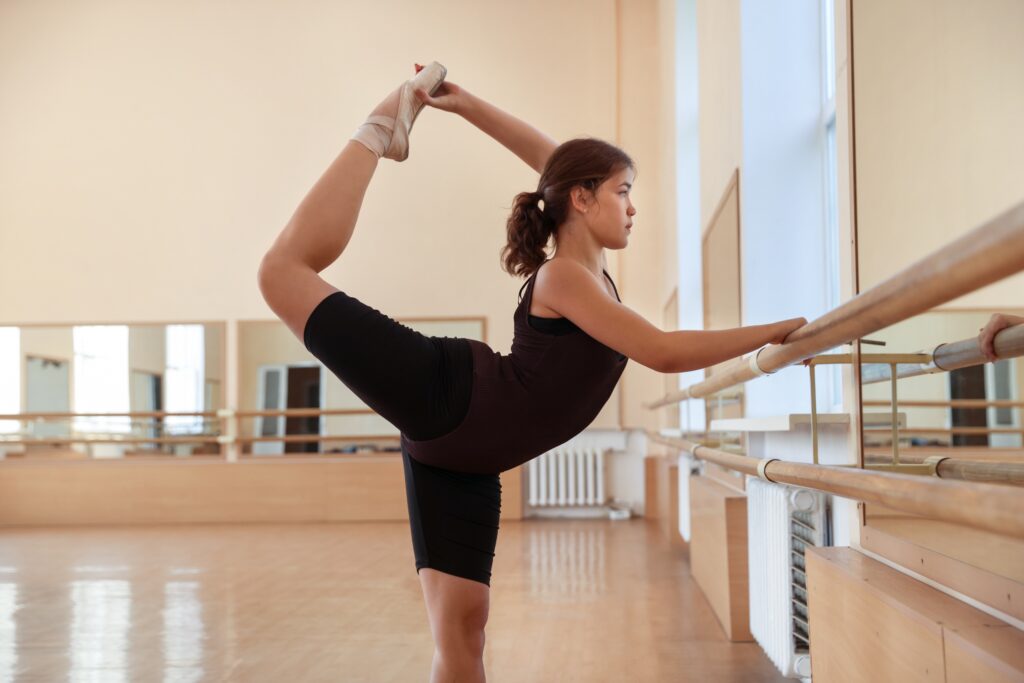
Stretching and strength training are important parts of ballet education. While ballet classes focus on technique, posture, and movement, dancers also need flexibility and physical strength to support their progress safely. Young ballet students who build these foundations gradually often feel more confident and comfortable in class.
Students are encouraged to develop healthy movement habits through proper warm-ups, stretching, and controlled exercises. These activities help support balance, coordination, posture, and safe technique while reducing the risk of strain or injury. Understanding how stretching and strength exercises support ballet training can help young dancers improve steadily and safely over time.
Why Stretching Matters in Ballet Training
Stretching helps dancers improve flexibility and mobility, both of which are important for ballet movements. In ballet, students are often required to extend their legs, point their feet, and move through positions that require a wide range of movement. Tight muscles can make these movements feel difficult and may affect posture and control.
Regular stretching also helps dancers become more aware of how their bodies move. As flexibility improves, movements usually become smoother and easier to perform. Students often feel more confident in class when their bodies can move comfortably through different exercises and routines. Stretching should always be approached carefully. Young dancers should never force themselves into painful positions or compare their flexibility with others. Safe stretching is about gradual improvement and learning how to move correctly rather than trying to achieve quick results.
The Importance of Warming Up Before Stretching
A proper warm-up is one of the most important parts of safe dance training. Stretching cold muscles can increase the risk of strain, especially for younger dancers whose bodies are still growing. Warming up helps increase circulation and prepares the muscles for movement. Warm-ups are introduced gently to help students feel ready before stretching begins. Even simple movements can make a big difference in preparing the body safely.
Common warm-up activities may include:
- Light jogging or marching on the spot
- Gentle arm swings and leg movements
- Slow rises onto the toes
- Controlled bending and reaching exercises
These exercises help dancers feel more relaxed and ready to move. Warm muscles respond better to stretching and support safer movement during ballet class.
Developing Flexibility in the Legs and Feet
Leg and foot flexibility play a major role in ballet technique. Dancers use their legs constantly for jumps, balances, and extensions, while the feet support posture and movement quality. Hamstring stretches help loosen the back of the legs and improve movement range. Calf stretches support ankle mobility and help dancers feel more comfortable when balancing or rising onto their toes. Gentle foot exercises also help improve the ability to point the toes correctly.
Students are encouraged to hold stretches steadily and breathe normally rather than rushing through them. Consistent stretching over time is far more effective than forcing flexibility in a single session. Developing flexibility gradually helps dancers feel more comfortable during class and supports cleaner technique as they progress.
Improving Hip Flexibility and Turnout Safely
Turnout is one of the most recognised parts of ballet technique, but it should always be developed safely. Turnout comes from the hips, not from twisting the knees or feet into uncomfortable positions. Young dancers sometimes try to force turnout because they want to copy more advanced students. However, safe turnout takes time and should develop naturally through proper strength and flexibility training.
Teachers guide students through gentle hip exercises and stretches that support mobility without placing pressure on the joints. Understanding how turnout works helps students move more safely and comfortably in class. Students are encouraged to focus on correct placement rather than trying to force flexibility beyond what their bodies can safely manage.
Building Core Strength for Better Control
Core strength is extremely important in ballet training. The core muscles support the spine, help maintain posture, and improve balance during movements. Without proper core support, dancers may struggle to hold positions or move with control.
Simple strength exercises can help students develop better stability and coordination. Over time, stronger core muscles help dancers:
- Maintain upright posture
- Improve balance during turns and balances
- Support smoother movement transitions
- Reduce pressure on the lower back
Exercises such as planks, controlled leg lifts, and balance work help build strength gradually. Teachers focus on correct technique so dancers learn how to use their muscles properly. As students become stronger, they often notice better control during class and greater confidence when performing more challenging movements.
Strengthening the Feet and Ankles
The feet and ankles work constantly in ballet. Strong feet help dancers balance correctly, point their toes with control, and move safely through jumps and rises. Young dancers benefit from exercises that strengthen the smaller muscles in the feet and ankles. These exercises also help improve stability and reduce the risk of injury.
Simple exercises may include:
- Pointing and flexing the feet slowly
- Practising controlled rises onto demi pointe
- Drawing circles with the ankles
- Picking up small objects with the toes
These movements may seem small, but they play an important role in supporting ballet technique and control.
Improving Balance Through Controlled Exercises
Balance is a major part of ballet training and takes regular practice to develop. Strength and posture both contribute to better balance, which is why controlled exercises are so important. Students often begin with simple balancing activities such as standing on one foot or holding basic ballet positions. These exercises help dancers become more aware of their posture and body placement.
As balance improves, dancers feel more stable during movements and more confident during class combinations. Good balance also helps students move more safely and with better control.
The Importance of Patience and Consistency
Stretching and strength development take time. Young dancers may want fast results, but healthy progress happens gradually through regular and careful practice. Short and consistent training sessions are usually more effective than long or intense sessions. Practising a few times each week helps dancers build strength and flexibility without placing too much strain on the body.
Every child develops differently, and students should be encouraged to focus on their own progress rather than comparing themselves to others. Patience helps dancers build confidence and maintain a positive attitude towards learning.
Avoiding Overstretching and Injury
One of the most important lessons in ballet training is learning how to work safely. Overstretching can place too much pressure on muscles and joints, especially for children whose bodies are still developing.
Students should understand that stretching should never feel painful. Gentle and controlled stretching is safer and more effective than forcing the body into difficult positions. Teachers at Kew School of Dance guide students carefully and encourage healthy movement habits that support long-term development. Safe technique is always prioritised over quick results.
Supporting Ballet Training Outside the Studio
Stretching and strength exercises can also be practised safely at home. Short practice sessions help students reinforce what they learn during class and build confidence in their movements.
Parents can support their child by encouraging regular practice in a calm and positive way. Creating a safe space for stretching and movement at home helps children stay motivated without pressure. The goal of home practice is not perfection. It is about helping dancers feel stronger, more flexible, and more comfortable with their movements over time.
Conclusion
Stretching and strength exercises are an important part of ballet training for young dancers in Kew. They support flexibility, posture, balance, and safe technique while helping students feel stronger and more confident in class. Kew School of Dance focuses on building strong foundations through safe and supportive ballet training. Our classes help students develop healthy habits that support both their dance progress and overall wellbeing. To learn more about our ballet programs or enrol your child, contact us at 03 9123 8458 or 0410 311 008. We are happy to support your child’s ballet journey.