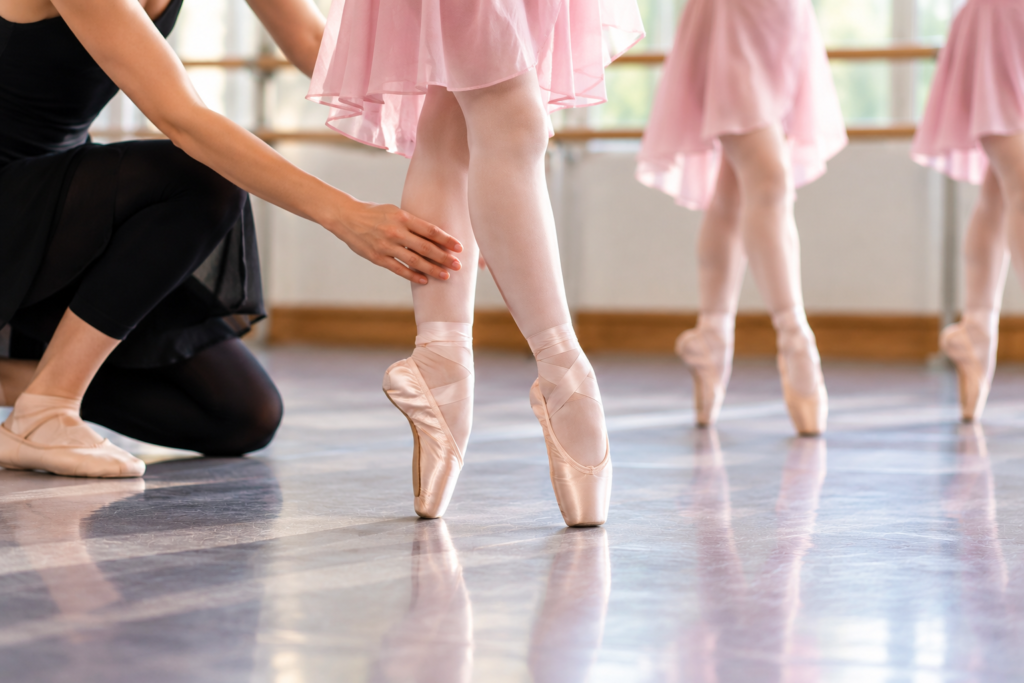
Starting pointe is an exciting milestone for many young ballet dancers. After years of practising ballet technique, developing strength, and improving coordination, wearing pointe shoes can feel like an important step forward in their dance journey.
However, pointe training requires more than enthusiasm or a desire to wear pointe shoes. Dancers need sufficient physical strength, technical control, balance, and maturity to manage the additional demands placed on their feet and ankles.
For parents, knowing when a child is ready can be difficult. Some dancers may begin pointe training earlier than others, but readiness should never be determined by age or experience alone.
Understanding the signs of pointe readiness can help parents support their child’s development while ensuring they progress at an appropriate pace.
Why Pointe Readiness Is Important
Pointe ballet involves supporting the body’s weight on the tips of the toes while wearing specially designed pointe shoes. This requires considerable strength and control throughout the feet, ankles, legs, hips, and core.
Unlike regular ballet exercises performed in soft shoes, pointe work places additional pressure on the feet and requires dancers to maintain precise alignment.
If a student begins before developing the necessary strength and technique, they may struggle to maintain balance or control their movements. This can increase the risk of discomfort, poor technique, and injury.
A proper readiness assessment helps teachers determine whether a dancer has developed the physical and technical foundations needed to begin.
The goal is not simply to decide whether a student can stand in pointe shoes. It is to determine whether they can safely control their body while performing the movements required in early pointe training.
What Age Should Children Start Pointe Ballet?
Parents often ask whether there is a recommended age for beginning pointe work.
Many dancers are considered for pointe training around 11 to 13 years of age or later, depending on their physical development, training history, and technical ability.
However, there is no universal age that guarantees readiness.
Two students of the same age may have very different levels of strength, coordination, and ballet experience. One may have attended regular ballet classes for several years, while another may still be developing fundamental technique.
Physical development also varies between children. Growth, joint stability, muscle strength, and body control can influence whether a student is ready for pointe.
For these reasons, age should be considered alongside a professional assessment rather than used as the only requirement.
Waiting longer does not mean a dancer is less talented or progressing too slowly. It simply allows more time to develop the skills needed for safe pointe training.
Signs Your Child May Be Ready for Pointe
There are several important indicators that ballet teachers consider when assessing pointe readiness.
These signs do not automatically mean a student should begin pointe work. Instead, they help teachers understand whether the dancer has developed a suitable foundation.
Some common signs include:
- Consistent ballet technique: The dancer can perform fundamental movements with correct placement and control.
- Strong feet and ankles: They can rise onto the balls of their feet and lower with stability.
- Good balance: They can maintain controlled positions without excessive wobbling.
- Core strength: They can support their posture without relying on unnecessary tension.
- Correct alignment: Their knees, ankles, and feet remain appropriately aligned during movement.
- Regular attendance: They have developed skills through consistent ballet training.
- Ability to follow corrections: They understand instructions and can make adjustments to their technique.
A teacher will usually observe these qualities across several exercises rather than relying on a single movement.
Readiness involves the ability to perform movements consistently, even when a dancer becomes tired or needs to coordinate several actions at once.
Strong Feet and Ankles Are Essential
Foot and ankle strength is one of the most important requirements for pointe training.
When dancers rise onto pointe, their feet and ankles must support their body weight while maintaining correct alignment.
Students who lack sufficient strength may struggle to control their position or compensate by placing unnecessary pressure on other joints.
Before beginning pointe, dancers should be comfortable performing controlled rises and lowers in soft ballet shoes.
Teachers may assess how well students maintain their ankle position, distribute their weight, and control their movements.
Foot and ankle preparation may include:
- Controlled relevés
- Slow rises and lowers
- Single-leg balance exercises
- Foot articulation exercises
- Strengthening activities using appropriate resistance
- Exercises that improve ankle stability
These activities help develop the strength and control required for more advanced ballet movements.
Students should complete strengthening exercises under appropriate guidance rather than attempting advanced pointe movements independently.
Balance and Core Stability Matter
Although pointe work focuses heavily on the feet, balance depends on the entire body.
Dancers need strong core muscles to maintain posture and control their weight during movement.
The muscles around the abdomen, back, hips, and pelvis help stabilise the body while the legs and feet perform different movements.
Without sufficient core stability, a dancer may lean forward, arch their back excessively, or struggle to maintain correct placement.
Balance exercises can help teachers identify whether a student can maintain control while standing on one leg or moving between positions.
For example, a student may be asked to hold a balance, complete a controlled rise, or move slowly through a sequence without losing alignment.
These exercises demonstrate how well different parts of the body work together.
Good balance and core control provide an important foundation for learning pointe technique.
Correct Ballet Technique and Alignment
Technical readiness is just as important as physical strength.
A dancer may have strong legs and ankles but still need additional time to develop correct ballet placement.
Pointe work requires students to maintain appropriate alignment through their feet, ankles, knees, hips, and upper body.
Poor alignment can place unnecessary stress on the joints and make movements more difficult to control.
Teachers assess how students perform fundamental ballet exercises, including pliés, tendus, relevés, and balances.
They may also observe whether students can maintain turnout without forcing their feet or knees into unsuitable positions.
Correct technique should remain consistent during both simple and more challenging movements.
A student who can maintain good alignment in regular ballet classes is generally better prepared to begin developing pointe technique than someone who frequently loses control of their positioning.
Why Regular Ballet Training Is Necessary
Pointe readiness develops through consistent ballet training rather than occasional practice.
Regular classes allow students to build strength, improve coordination, understand technical corrections, and become familiar with classical ballet movements.
Teachers can gradually introduce more challenging exercises as students develop.
Consistent attendance also helps dancers strengthen the muscles used during ballet and improve their ability to perform movements correctly over time.
The amount of training needed before pointe varies between students and dance schools. Teachers may recommend a suitable frequency of ballet classes based on the dancer’s age, experience, and goals.
Simply attending ballet for a certain number of years does not automatically make a student ready.
The quality and consistency of their technique are more important than the amount of time they have been enrolled.
What Happens During a Pointe Readiness Assessment?
A pointe readiness assessment helps determine whether a student has developed the necessary physical and technical skills to begin training.
The exact assessment process may vary between dance schools.
A ballet teacher may observe the dancer performing a series of exercises designed to assess strength, balance, alignment, coordination, and movement control.
These may include:
- Relevés on one or both legs
- Controlled pliés
- Single-leg balances
- Foot and ankle strengthening movements
- Basic ballet combinations
- Posture and alignment exercises
- Controlled transitions between positions
The teacher may also consider the student’s training history, attendance, ability to follow corrections, and physical development.
In some cases, an assessment by a physiotherapist or another qualified healthcare professional with dance experience may be recommended.
The purpose of the assessment is to identify whether the student is ready to begin or would benefit from additional preparation.
What If Your Child Is Not Ready for Pointe Yet?
Being told that a child is not ready for pointe can sometimes feel disappointing, particularly if their classmates are beginning training.
However, needing more preparation is a normal part of ballet development.
Every dancer progresses differently, and additional time can help students build the strength and technique required for pointe.
Teachers may recommend specific exercises or continued participation in regular ballet classes.
Parents can support their child by focusing on the progress they are making rather than comparing them with other dancers.
It can also help to explain that pointe is an advanced skill that requires preparation, much like learning a more difficult movement in another sport or activity.
A delayed start does not prevent a dancer from progressing successfully in ballet.
What matters is beginning when they have developed the necessary foundations.
The Importance of Pre-Pointe Training
Pre-pointe training is designed to prepare dancers for the physical demands of pointe work.
These exercises help strengthen the feet, ankles, legs, and core while reinforcing correct ballet technique.
Pre-pointe preparation may be incorporated into regular ballet classes or offered through a dedicated program.
Students may work on controlled rises, balance, foot articulation, ankle stability, and maintaining correct alignment during movement.
Teachers can also use this period to identify areas that need improvement before a dancer begins wearing pointe shoes.
For example, a student may have good balance but need additional ankle strength. Another may be physically strong but need to improve their posture or technical consistency.
Pre-pointe training allows these areas to be addressed gradually.
This preparation can help dancers approach their first pointe classes with greater confidence and control.
Why Pointe Shoes Should Not Be Purchased Too Early
Pointe shoes are often an exciting purchase for young dancers, but parents should wait until their child’s teacher confirms they are ready.
Unlike regular ballet shoes, pointe shoes have a reinforced toe box and supportive sole designed for trained dancers.
Wearing pointe shoes without sufficient strength and technique can make it difficult to maintain proper alignment and may increase the risk of injury.
Once a student has been approved to begin pointe, professional shoe fitting is important.
A trained fitter can assess the dancer’s foot shape, width, toe length, and support requirements to recommend an appropriate shoe.
The ballet teacher may also provide guidance about suitable styles and fitting requirements.
Children should not attempt pointe movements at home before receiving proper instruction and approval.
How Parents Can Support Safe Pointe Progression
Parents play an important role in helping young dancers prepare for pointe training.
One of the most helpful things parents can do is encourage patience and trust the assessment process.
Pointe readiness is based on individual development, and students should not feel pressured to begin simply because their friends are progressing.
Parents can support their child by:
- Encouraging consistent attendance at ballet classes
- Supporting appropriate strengthening exercises recommended by the teacher
- Ensuring their child has suitable dancewear and footwear
- Encouraging adequate rest and recovery
- Listening when their child reports pain or discomfort
- Maintaining communication with their ballet teacher
- Recognising progress in technique and strength
It is also important to remind children that pointe is only one part of ballet.
Students can continue developing their technique, musicality, performance skills, and enjoyment of dance whether or not they are currently training on pointe.
Conclusion
Knowing when a dancer is ready to start pointe involves more than reaching a particular age or completing several years of ballet classes. Strength, balance, coordination, correct alignment, technical consistency, and physical development all play important roles.
A proper pointe readiness assessment helps teachers determine whether a student has developed the necessary foundation or would benefit from additional preparation.
For parents, the best approach is to encourage regular ballet training, support their child’s progress, and allow their teacher to guide the transition into pointe work.
Kew School of Dance, our classes provide young dancers with a supportive environment where they can develop their ballet technique, strength, coordination, and confidence. If you would like to learn more about our ballet classes or discuss your child’s readiness for pointe training, contact us at 03 9123 8458 or 0410 311 008.