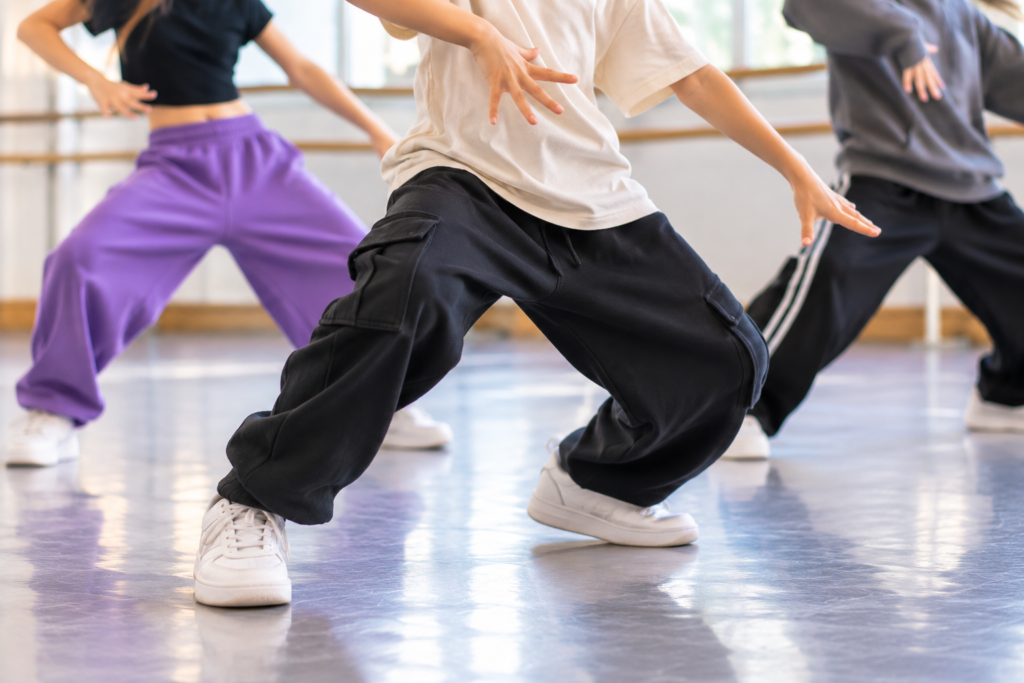
Keeping children and teenagers physically active is important for their health, development, and overall wellbeing. However, not every child enjoys traditional sports or structured exercise. Some prefer activities that involve music, creativity, and the freedom to express themselves.
Hip hop dance offers an energetic way for kids and teens to stay active while learning new skills. With its combination of rhythmic movements, footwork, body control, and choreography, hip hop provides a full-body workout that can improve fitness, coordination, strength, and confidence.
Unlike repetitive exercise routines, hip hop classes introduce different movements and combinations that keep students engaged. Whether children are trying dance for the first time or already have some experience, hip hop can provide an enjoyable way to develop healthy movement habits.
What Is Hip Hop Dance?
Hip hop dance is a style of movement closely connected to hip hop music and culture. It includes a range of energetic movements, rhythmic footwork, body isolations, and expressive choreography.
Hip hop dance developed through street dance traditions and has continued to evolve into different styles and approaches. In dance schools, classes often combine foundational movements with choreographed routines suitable for the students’ age and experience.
Unlike some dance styles that focus heavily on traditional technique, hip hop encourages dancers to explore rhythm, individuality, and personal expression.
A typical hip hop class may include:
- Warm-up exercises
- Basic footwork and movement patterns
- Body isolations
- Rhythm and musicality exercises
- Travelling movements
- Short dance combinations
- Choreography and group routines
These activities involve different muscle groups and require students to coordinate their movements with music.
How Hip Hop Dance Improves Physical Fitness
Hip hop is a physically active dance style that often involves continuous movement, changes in direction, and combinations performed at different speeds.
During a class, students may move between standing positions, footwork sequences, jumps, turns, and energetic dance routines. These movements increase physical activity and encourage children to use their whole body.
Regular participation can help improve cardiovascular fitness, muscular endurance, and overall movement ability.
Hip hop classes can also provide an alternative for children who do not enjoy conventional exercise.
Instead of focusing on completing a workout, students concentrate on learning movements, remembering choreography, and dancing to music.
This can make physical activity feel more enjoyable and encourage children to participate consistently.
Building Strength Through Dance Movements
Hip hop dance uses several major muscle groups, making it a useful activity for developing functional strength.
The legs support movements such as bending, stepping, jumping, and changing direction. The core helps maintain balance and control, while the arms and shoulders contribute to expressive movements and choreography.
Many hip hop combinations also require students to move between different levels, such as standing upright, bending their knees, or lowering their body towards the floor.
These movements encourage different muscles to work together.
Regular classes may help children develop:
- Leg strength
- Core stability
- Muscular endurance
- Upper-body control
- Balance and stability
- Overall movement strength
The level of physical challenge depends on the student’s age, experience, and the movements being taught.
Teachers can introduce exercises gradually so children build strength and control without being pushed beyond their abilities.
Improving Coordination and Body Awareness
Hip hop dance requires students to coordinate different parts of their body while following music.
A dancer may need to perform a footwork pattern while moving their arms, changing direction, and maintaining the correct rhythm.
For beginners, combining these movements can initially feel challenging. Students may find it easier to concentrate on one movement before adding another.
Dance teachers often break choreography into smaller sections so students can understand each movement before putting the full combination together.
Through repetition, children gradually become more comfortable coordinating their arms, legs, shoulders, hips, and core.
Hip hop also introduces body isolations, which involve moving one part of the body while keeping other areas relatively still.
These exercises can improve body awareness and help students develop greater control over their movements.
Developing Cardiovascular Endurance
Cardiovascular endurance refers to the body’s ability to sustain physical activity over time.
Hip hop dance can provide a cardiovascular workout because many routines involve repeated movements performed with energy and rhythm.
Students may practise short combinations several times before performing a complete routine. Depending on the choreography, these activities can involve continuous stepping, travelling, jumping, and changes in speed.
As children participate regularly, they may gradually become more comfortable maintaining physical activity for longer periods.
Improved endurance can also support participation in other activities, including running, playing sport, and active games.
However, the intensity of a hip hop class can vary. Some lessons may focus more on learning technique and choreography, while others involve longer periods of energetic movement.
A balanced class allows students to develop their skills while receiving appropriate opportunities for rest and recovery.
Improving Flexibility and Mobility
Hip hop involves a wide variety of movements that require different joints and muscles to move comfortably.
Students may bend, twist, reach, turn, and move between different body positions during choreography.
Warm-up exercises can help prepare the muscles and joints for these activities, while controlled movement practice encourages students to explore their available range of motion.
Flexibility and mobility are related but slightly different.
Flexibility refers to how far muscles can lengthen, while mobility involves the ability to move a joint through its range of motion with control.
Hip hop classes can encourage both through varied movement patterns.
Students do not need to be naturally flexible to begin learning hip hop. Teachers can adapt movements according to their age, experience, and physical abilities.
Supporting Healthy Physical Activity Habits
Developing an interest in physical activity during childhood can help establish positive habits as children grow.
However, encouraging regular exercise can sometimes be difficult, particularly when children spend much of their free time using digital devices or participating in sedentary activities.
Hip hop dance provides an alternative that combines movement with music and social interaction.
Children may look forward to attending classes because they enjoy the songs, choreography, and opportunity to learn alongside other students.
This enjoyment can make regular participation easier to maintain.
Rather than viewing exercise as something they are required to do, children may begin associating physical activity with creativity, achievement, and enjoyment.
Dance can form part of a balanced lifestyle that also includes outdoor play, other physical activities, adequate rest, and healthy daily routines.
Building Confidence and Self-Expression
Hip hop is not only about physical fitness. It also gives children and teenagers opportunities to express themselves through movement.
Students learn how to interpret music and perform choreography using different levels of energy, rhythm, and movement quality.
As they become more comfortable with the style, they may begin developing their own sense of expression.
Learning a new routine can also provide a sense of achievement.
A movement that initially feels difficult may become easier after several classes. Students can recognise their progress as they remember longer combinations, improve their timing, and perform with greater confidence.
For teenagers, hip hop can offer a creative outlet where they can explore their interests and develop confidence in their abilities.
A supportive class environment encourages students to participate without feeling that every movement needs to be perfect.
Developing Rhythm and Musicality
Music plays an important role in hip hop dance.
Students learn to listen carefully to beats, rhythms, pauses, and changes in tempo. They then practise matching their movements to what they hear.
This requires concentration and coordination.
For example, a dancer may need to complete a movement on a particular beat, pause briefly, or change direction when the music changes.
As students become more experienced, they can begin recognising different musical patterns and responding with greater accuracy.
Hip hop also encourages dancers to explore how movements can be performed with different qualities.
The same step may look and feel different depending on whether it is performed sharply, smoothly, quickly, or slowly.
Developing musicality helps students become more confident and expressive dancers.
Encouraging Social Interaction and Teamwork
Hip hop classes provide opportunities for children and teenagers to interact with others who share an interest in dance.
Students often learn choreography together, practise in groups, and perform routines as a class.
These activities encourage cooperation and awareness of other dancers.
During group choreography, students may need to maintain their position, follow the same timing, and adjust their movements to stay coordinated with the group.
They also learn to listen to instructions, respect others’ personal space, and support classmates as they practise.
For children who are naturally shy, regular classes can provide a familiar environment where friendships develop gradually.
The shared experience of learning and performing choreography can help students feel part of a group.
Is Hip Hop Dance Suitable for Beginners?
Hip hop can be suitable for beginners because many foundational movements can be introduced gradually.
Children do not necessarily need previous dance experience to begin learning basic footwork, rhythm, and simple choreography.
Beginner classes generally focus on helping students become comfortable with the movements before introducing more complicated combinations.
Teachers may demonstrate a step, break it into smaller parts, and allow students to practise at a manageable pace.
As students improve, they can progress towards longer routines and more challenging movements.
Parents should choose a class that matches their child’s age and experience.
An age-appropriate class allows children to develop technique and confidence while enjoying the learning process.
Why Hip Hop Appeals to Teenagers
Teenagers often look for activities that allow them to develop independence, explore personal interests, and spend time with friends.
Hip hop dance can appeal to this age group because it combines contemporary music, energetic movement, and creative expression.
Students can learn choreography while developing their own movement style and musical interpretation.
The physical demands of hip hop can also provide an enjoyable way to stay active during adolescence.
Classes offer opportunities to work towards personal goals, whether that involves improving technique, remembering more challenging routines, or becoming more comfortable performing.
For teenagers who are not interested in competitive sports, hip hop can provide another structured activity that supports fitness, confidence, and social interaction.
Why Regular Hip Hop Classes Make a Difference
Like other physical activities, the benefits of hip hop dance develop gradually through consistent participation.
Attending classes regularly gives students opportunities to practise movements, improve coordination, and build physical endurance.
Teachers can introduce new techniques while revisiting familiar exercises, allowing students to build on what they have already learned.
Regular attendance also helps children remember choreography and become more comfortable with class routines.
As students progress, they may notice improvements in their movement control, timing, stamina, and ability to learn new combinations.
The goal is not for every child to become a professional dancer. Hip hop provides an opportunity to enjoy physical activity while developing skills that can support their overall growth and confidence.
Conclusion
Hip hop dance is an energetic and enjoyable activity that can help kids and teens improve their physical fitness, strength, coordination, flexibility, and cardiovascular endurance.
Through regular classes, students also develop rhythm, musicality, confidence, creativity, and social skills. The combination of movement and music can make exercise feel more engaging while encouraging children to maintain an active lifestyle.
Kew School of Dance, our classes provide children and teenagers with a supportive environment where they can develop their dance skills, improve their fitness, and enjoy learning new movements. If you would like to learn more about our hip hop classes or find the right class for your child, contact us at 03 9123 8458 or 0410 311 008.