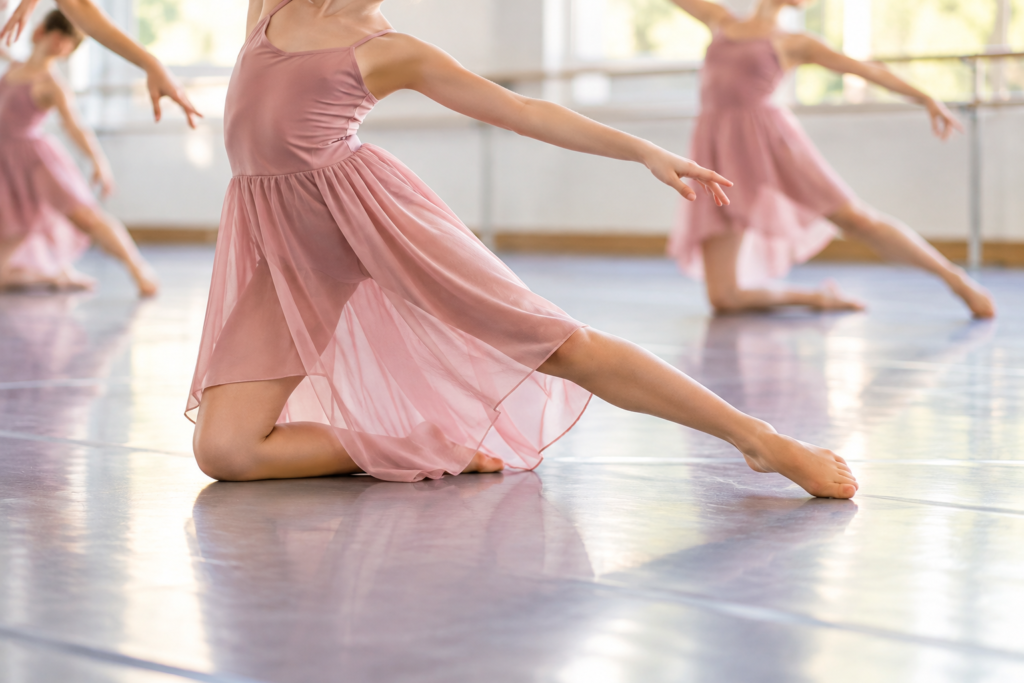
Lyrical dance is a style that combines expressive movement with elements of ballet and jazz. Dancers use technique, musicality, and emotion to interpret the music and communicate its mood or story through movement.
For young dancers, lyrical classes provide an opportunity to develop technique while exploring a more expressive side of dance. Students may learn flowing movements, turns, jumps, floor work, and dance combinations that encourage them to connect their movements with the music. If your child is interested in lyrical dance, understanding what happens in a class and what skills they may develop can help you decide whether the style is a good fit. This guide explains the basics of lyrical dance and what parents and young dancers can expect.
What Is Lyrical Dance?
Lyrical dance brings together techniques and movements from different dance styles, particularly ballet and jazz. It is often recognised for its flowing movements and strong connection between the dancer and the music. Unlike dance styles that focus mainly on performing movements to a beat, lyrical dance encourages dancers to consider the meaning, mood, and feeling of the music. Movements may be soft and controlled during one section before becoming faster or more powerful as the music changes. This gives dancers opportunities to explore different movement qualities within the same routine.
Lyrical dance can include:
- Turns and spins
- Leaps and jumps
- Extensions and leg movements
- Floor work
- Controlled transitions
- Ballet-inspired technique
- Jazz-influenced movements
- Expressive arm and upper-body movements
The exact movements taught will depend on the dancer’s age, experience, and class level.
How Is Lyrical Dance Different From Ballet and Jazz?
Lyrical dance shares many characteristics with ballet and jazz, but each style has its own focus. Ballet provides much of the technical foundation used in lyrical dance. Posture, alignment, balance, pointed feet, turns, extensions, and controlled movements can all play an important role. Jazz often contributes more dynamic movements, changes in energy, and a wider variety of movement styles.
Lyrical dance brings these elements together while placing greater emphasis on musical interpretation and expression. For example, dancers may perform a technically similar turn in several different dance styles. In lyrical dance, however, the movement may be performed in a particular way to reflect what is happening in the music. This combination allows students to use the technique they develop in other classes while learning how to communicate through movement.
What Happens in a Lyrical Dance Class?
A lyrical dance class will usually include a combination of warm-up exercises, technique practice, movement across the floor, and choreography. The structure may vary depending on the students’ age and experience. Classes generally begin with exercises designed to prepare the body for movement. Students may work on flexibility, posture, alignment, strength, and control.
The teacher may then introduce technical exercises such as turns, leaps, extensions, or travelling movements. Students can practise these skills individually before using them as part of a longer combination. Choreography is another important part of lyrical dance. Students learn sequences that combine different movements while following the rhythm, mood, and structure of the music. As dancers progress, they may also explore transitions, floor work, changes in direction, and different ways of expressing the same movement.
Developing Musicality and Expression
One of the main features of lyrical dance is the connection between movement and music. Musicality refers to a dancer’s ability to listen to music and respond through movement. This involves more than simply staying on the beat. Students learn to notice changes in tempo, rhythm, volume, and mood. They may also begin recognising pauses, accents, and other musical details that can influence how a movement is performed.
For example, a slow section of music might involve longer, more controlled movements. A stronger musical moment might be matched with a jump, turn, or more powerful movement. This encourages dancers to listen carefully rather than simply memorising steps. Expression develops alongside musicality. Students learn how posture, facial expression, movement quality, and energy can communicate different feelings without needing to speak.
Building Strength, Flexibility, and Control
Although lyrical dance can appear soft and flowing, performing movements with control requires strength. Dancers use their core to maintain balance and posture, while their legs and feet support jumps, turns, extensions, and travelling movements. The upper body also needs enough control to create smooth and intentional arm movements. Regular classes may include exercises that help students gradually develop:
- Core strength
- Leg and ankle strength
- Balance
- Flexibility
- Posture
- Coordination
- Movement control
Flexibility can also be useful for certain lyrical movements, but it is developed progressively. Students should not feel that they need to be highly flexible before beginning lyrical dance. Technique, control, and safe movement are more important than trying to achieve difficult positions too quickly.
Improving Balance and Coordination
Lyrical choreography often requires dancers to move smoothly between different positions. A student may travel across the floor, complete a turn, transition into a floor movement, stand again, and continue into another sequence. Each movement needs to connect naturally with the next. This requires coordination between the arms, legs, core, head, and upper body.
Balance is also important for turns, extensions, poses, and controlled transitions. Through regular practice, dancers learn how to shift their weight, maintain alignment, and prepare their bodies for the next movement. Younger or less experienced students usually begin with simpler combinations. As their coordination and technique develop, they can gradually work towards more detailed choreography.
Learning How to Tell a Story Through Movement
One aspect that many young dancers enjoy about lyrical dance is the opportunity to tell a story without words. The story does not always need to be complicated. Sometimes the goal is simply to communicate the feeling or atmosphere of a piece of music. Teachers may encourage students to think about questions such as what the music makes them feel, whether a movement should be soft or strong, and how their expression can match the choreography.
This helps children understand that dance is not only about completing steps correctly. Two dancers can perform the same choreography but bring slightly different qualities to the movement. As students become more confident, they can begin developing their own understanding of how to express the music while still following the choreography. This combination of structure and creativity is an important part of lyrical dance.
Can Beginners Learn Lyrical Dance?
Children do not necessarily need years of dance experience before being introduced to lyrical movement. However, the appropriate class will depend on their age, previous training, and the requirements of the dance school. Because lyrical dance uses techniques from ballet and jazz, experience in these styles can provide a helpful foundation. Students who already understand basic posture, alignment, turns, jumps, and dance terminology may find it easier to learn lyrical combinations.
Beginners can still develop these skills gradually with suitable instruction. Parents should look for a class appropriate to their child’s current experience rather than choosing a more advanced class simply because the choreography looks exciting. Learning the fundamentals first can help students develop stronger technique and greater confidence as they progress.
What Should Children Wear to Lyrical Dance?
Appropriate dancewear allows students to move comfortably while also helping teachers see alignment and technique. The exact clothing and footwear requirements can vary between dance schools and class levels. Parents should check with their dance school before purchasing anything specifically for lyrical classes.
Generally, dancewear should allow children to stretch, turn, jump, and move freely without becoming distracting or restricting movement. Hair may also need to be secured away from the face so students can move comfortably and teachers can clearly see their posture and positioning. Following the school’s uniform guidelines also helps students arrive prepared and ready to participate in class.
How Lyrical Dance Can Build Confidence
Learning lyrical dance can give children opportunities to develop confidence in both their movement and self-expression. Students may initially feel unsure about performing expressive choreography, particularly if they are accustomed to concentrating mainly on technique. Over time, a supportive class environment can help them become more comfortable experimenting with different movement qualities.
Learning choreography also gives children clear opportunities to see their progress. A combination that initially feels difficult may become more natural after several classes. These achievements can help students recognise the value of practice and persistence. Performing choreography in front of classmates, teachers, family members, or an audience can also help children gradually become more comfortable expressing themselves through dance.
Is Lyrical Dance Right for Your Child?
Every child has different interests, so there is no single dance style that suits everyone. Lyrical dance may appeal to children who enjoy music, expressive movement, storytelling, ballet, jazz, or learning choreography that combines technical and creative elements. Some children enjoy the flowing quality of lyrical dance, while others are attracted to the opportunity to interpret music and express different emotions through movement.
Parents can talk with their child’s dance teacher about whether lyrical classes are suitable for their age and current level of training. It can also be helpful to let children explore different dance styles. Trying different classes allows them to discover the types of movement they enjoy while developing a broader range of skills.
Conclusion
Lyrical dance combines elements of ballet and jazz with musical interpretation and expressive movement. Through classes, young dancers can work on technique, coordination, balance, strength, flexibility, musicality, and their ability to communicate through movement. It can also give children a creative way to explore music and develop greater confidence in their dancing. As with any dance style, skills develop gradually through appropriate instruction, regular attendance, and practice.
Kew School of Dance, our classes provide young dancers with a supportive environment where they can develop their technique, confidence, musicality, and enjoyment of dance. If you would like to learn more about lyrical dance or find the right class for your child, contact contact us at 03 9123 8458 or 0410 311 008.