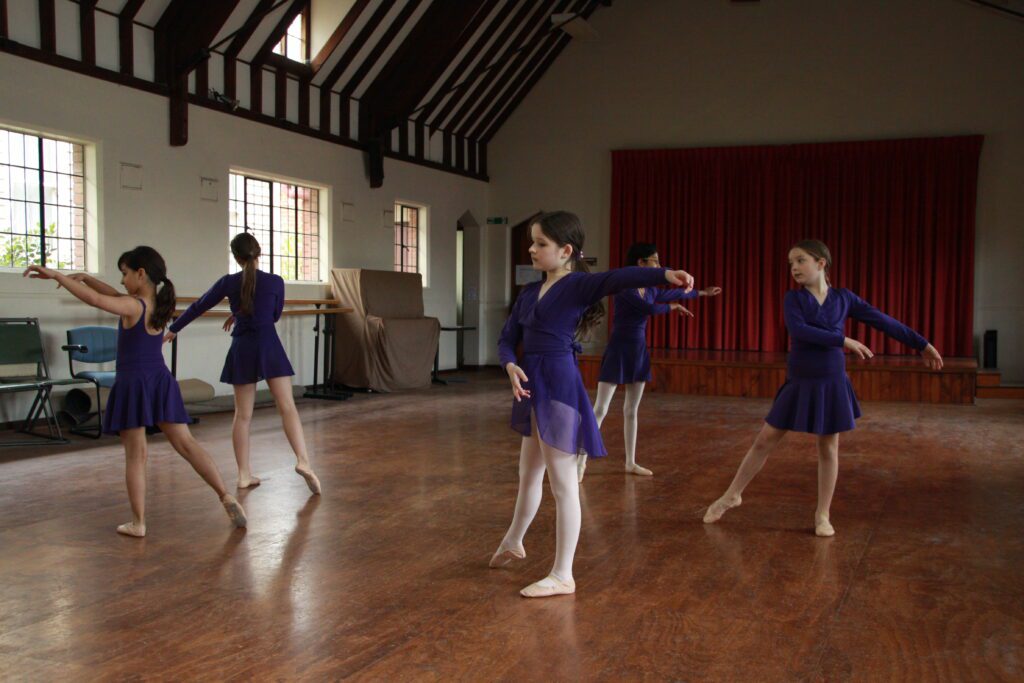
Balance and body awareness are important physical skills that children develop as they grow. These skills help children move safely, control their bodies, and feel more confident during everyday activities. While balance can develop naturally through play and movement, structured activities such as dance can give children more opportunities to strengthen these skills.
Dance classes introduce children to movements that require control, coordination, posture, and an understanding of where their body is in space. Through regular practice, children learn how to stand steadily, shift their weight, coordinate different parts of their body, and respond to changes in movement. These skills can support their progress in dance while also helping with physical activities outside the studio.
Understanding Balance and Body Awareness in Children
Balance is the ability to maintain control of the body while standing still or moving. Children use balance every day when they walk, run, climb stairs, ride a bike, or play in the playground. Good balance helps them move with greater confidence and reduces the chance of unnecessary falls.
Body awareness is slightly different. It refers to a child’s understanding of where different parts of their body are and how they are moving. For example, a child needs body awareness to understand how far to lift an arm, where to place a foot, or how to move around another person without bumping into them. Dance combines these two skills naturally. Students are regularly asked to control their position while also thinking about their arms, legs, feet, head, and posture. With practice, these movements become easier and more natural.
How Dance Exercises Help Improve Balance
Dance classes include many exercises that require children to stay steady while changing positions. A student might need to stand on one leg, rise onto their toes, move across the floor, or hold a position for several counts. At first, these movements can be challenging. Children may wobble or need time to find a comfortable position. This is a normal part of learning. With regular practice, the muscles used for stability become stronger and children learn how to adjust their bodies to maintain balance.
Common dance activities that can support balance include:
- Standing on one foot for short periods
- Moving slowly from one position into another
- Practising controlled rises and lowers
- Holding simple dance positions
- Learning how to land safely after small jumps
These exercises are introduced according to a student’s age and experience so that balance develops gradually.
Developing Better Body Awareness Through Movement
Dance requires children to think carefully about how they move. Teachers may ask students to straighten their backs, position their arms correctly, point their feet, or adjust the direction of their head. Following these instructions encourages children to pay attention to parts of the body they may not usually think about. Over time, they begin to recognise how small adjustments can change the way a movement looks and feels.
Mirrors, teacher demonstrations, and simple corrections can also help students understand their movements more clearly. Instead of simply copying a step, children gradually learn why their body needs to be placed in a certain position. This stronger awareness can help them become more controlled and confident movers.
Improving Posture and Alignment
Good posture is closely connected to both balance and body awareness. When children understand how to hold their bodies correctly, it becomes easier to stay balanced and complete movements with control. Dance classes regularly encourage students to think about their posture. They learn how to stand tall without becoming stiff, keep their shoulders relaxed, and use their core to support their movements.
Developing better posture can also be useful outside the dance studio. Children use posture while sitting at school, walking, playing sport, and completing everyday activities. Dance helps make good posture a regular habit rather than something children only think about during class.
Strengthening the Muscles That Support Balance
Balance is not only about concentration. The body also needs enough strength to hold and control different positions. Dance uses many muscle groups at the same time, including the legs, feet, ankles, back, and core. Regular movement helps strengthen these areas gradually without needing heavy equipment. Strong feet and ankles provide a stable base, while leg muscles help control changes in position. The core helps support posture and keeps the upper and lower body working together.
As these areas become stronger, children may find it easier to:
- Hold positions for longer
- Move smoothly between steps
- Stay steady during turns
- Control their landings
- Maintain better posture during movement
Strength and balance develop together, which is why regular dance training can be helpful for growing children.
Learning Coordination Between Different Parts of the Body
Many dance movements require several parts of the body to work together. A child may need to move their feet in one pattern while their arms perform a different movement, all while listening to music and maintaining good posture. This can be difficult for beginners, but repetition helps develop coordination. Teachers usually introduce combinations gradually so students have time to understand each part before putting the whole movement together.
As coordination improves, children become better at controlling several movements at once. They also become more comfortable changing direction, adjusting their speed, and responding to instructions. These skills can support other physical activities that require good coordination and movement control.
Understanding Space and Moving Safely Around Others
Body awareness also involves understanding where the body is in relation to other people and objects. This is especially important in a dance class where several students may be moving at the same time. Children learn to recognise how much space they need and how to move without getting too close to classmates. Teachers guide students in travelling across the floor, changing direction, and maintaining appropriate spacing during group exercises.
Learning spatial awareness helps children become safer and more confident when moving in groups. It also teaches them to pay attention to what is happening around them rather than focusing only on themselves.
Building Confidence Through Better Movement Control
Children often become more confident when they feel in control of their bodies. A movement that once felt difficult can become easier after several weeks of practice, giving students a clear sense of progress.
This improvement can encourage children to try new movements without being as worried about making mistakes. They learn that wobbling, losing balance, or forgetting a step is simply part of the learning process. Teachers can support this confidence by recognising effort and encouraging children to keep practising. As students become stronger and more coordinated, they often feel more comfortable participating fully in class.
Why Regular Practice Makes a Difference
Balance and body awareness do not develop in a single lesson. Like most physical skills, they improve gradually through regular practice and repetition. Weekly dance classes give children consistent opportunities to work on these skills. Exercises can become slightly more challenging as students develop, allowing them to continue improving without being pushed too quickly.
Regular attendance also helps children remember what they have learned. Instead of starting again each week, they can build on previous skills and become more confident with familiar movements. Parents do not need to encourage long practice sessions at home. Simple movement, active play, and regular class attendance can all help support steady development.
Supporting Healthy Movement as Children Grow
Children’s bodies change as they grow, and developing good movement habits early can help them understand how to use their bodies safely. Dance provides structured opportunities to practise posture, balance, coordination, and controlled movement with guidance from a teacher.
The goal is not for every child to achieve perfect balance or technique. Instead, dance gives students the tools to become more aware of their bodies and confident in how they move. These skills can continue to benefit children whether they stay with dance for many years or eventually explore other activities.
Conclusion
Dance classes can help children develop better balance and body awareness through regular, controlled movement. By practising posture, coordination, spatial awareness, strength, and different balance exercises, children gradually learn how to move with greater confidence and control.
Kew School of Dance, our classes provide children with a supportive environment where they can develop their dance skills while building strong movement foundations. If you would like to learn more about our classes or find the right class for your child, contact us at 03 9123 8458 or 0410 311 008.