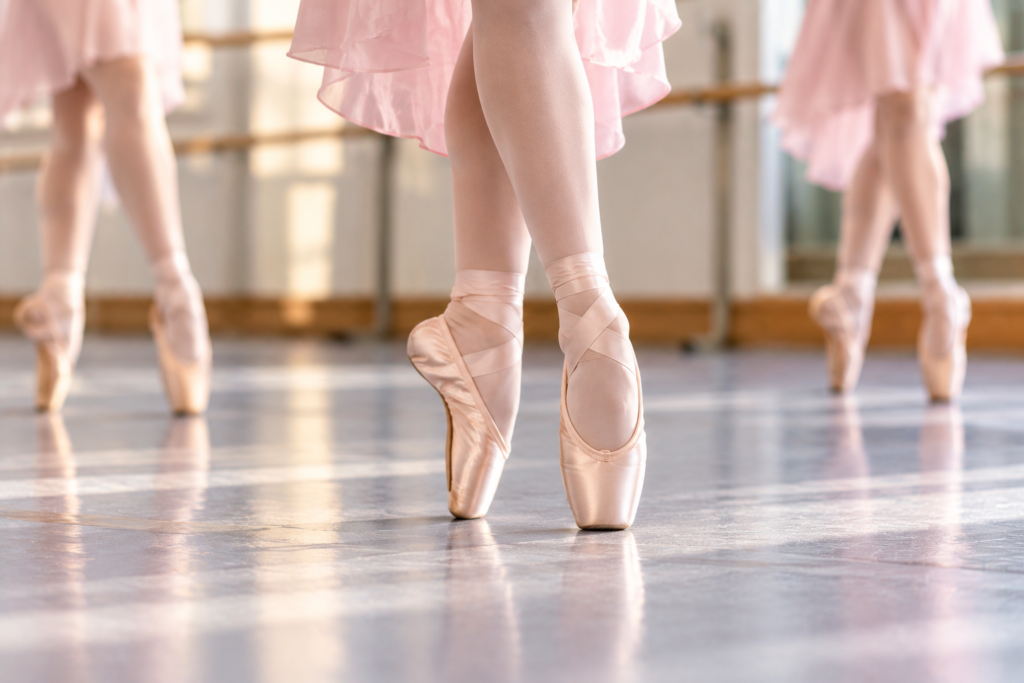
Pointe ballet is one of the most recognisable parts of classical ballet. Watching dancers balance, turn, and move gracefully on the tips of their toes can be exciting, particularly for young students who dream of wearing pointe shoes themselves.
However, pointe work is an advanced ballet technique that requires strength, balance, coordination, and careful preparation. Unlike regular ballet classes, pointe training places additional demands on the feet, ankles, and lower body. Students need to develop a strong technical foundation before they are ready to begin.
For parents, understanding when pointe training is appropriate and what the process involves can help them support their child’s development safely. This guide explains what pointe ballet is, how dancers prepare, and what families should know before taking this important step in ballet training.
What Is Pointe Ballet?
Pointe ballet is a classical ballet technique in which dancers perform movements while supporting their weight on the tips of their toes using specially designed pointe shoes.
These shoes have a reinforced toe box and a supportive sole that allow trained dancers to rise onto pointe and perform movements such as balances, turns, and travelling steps.
Although pointe work can appear effortless when performed by experienced dancers, it requires considerable strength and control.
Dancers must maintain correct alignment through their feet, ankles, knees, hips, and upper body while supporting their weight in a much smaller area than usual.
Pointe training is generally introduced after students have developed sufficient ballet technique and physical readiness. It is not usually suitable for beginners or young children who are still learning the fundamentals of classical ballet.
How Is Pointe Ballet Different From Regular Ballet?
Regular ballet classes teach students the foundations of classical technique. These include posture, alignment, balance, coordination, flexibility, musicality, and controlled movement.
Students typically practise in soft ballet shoes, which allow the feet to move naturally while developing strength and technique.
Pointe ballet builds on these foundations but introduces the additional challenge of supporting body weight on the tips of the toes.
This requires dancers to maintain their alignment while performing movements in pointe shoes.
The main differences include:
- Footwear: Pointe dancers wear specially constructed shoes rather than regular soft ballet shoes.
- Strength: Pointe work requires additional strength and stability in the feet, ankles, legs, and core.
- Balance: Dancers must control their body weight over a smaller supporting area.
- Technique: Correct placement and alignment become particularly important.
- Preparation: Students need appropriate training and an individual readiness assessment before beginning.
Pointe ballet is not a separate replacement for regular ballet. Instead, it is an advanced part of classical ballet training that builds on skills developed over several years.
At What Age Can Children Start Pointe Ballet?
One of the most common questions parents ask is when their child can begin pointe training.
There is no single age that guarantees a dancer is ready. Pointe work is commonly considered around 11 to 13 years of age or later, but age alone should never determine readiness.
Every child develops differently. Some students may have the necessary strength and technical foundation at a particular age, while others may need additional time.
A ballet teacher should consider several factors before recommending pointe training, including:
- The student’s age and physical development
- Previous ballet training and class attendance
- Foot and ankle strength
- Balance and coordination
- Core stability and posture
- Ability to maintain correct alignment
- Control during basic ballet movements
- Overall technical consistency
A qualified teacher may also recommend an assessment by a healthcare professional experienced in dance medicine when appropriate.
Starting pointe too early can place unnecessary stress on developing feet and ankles. Waiting until a student is physically and technically prepared is an important part of supporting safe, long-term progress.
Why Strength and Technique Matter Before Pointe
Pointe ballet requires more than being able to stand on the tips of the toes. Dancers need sufficient strength throughout the body to maintain proper alignment and control their movements.
The feet and ankles provide the foundation, but the legs, hips, back, and core also play important roles.
For example, weak ankle control may make it difficult to maintain a stable position. Poor alignment through the knees or hips can also affect how weight is distributed through the feet.
Before beginning pointe training, students should be comfortable performing fundamental ballet exercises with consistent technique.
These may include controlled rises, balances, pliés, tendus, and other exercises that develop strength and alignment.
Teachers look for students who can perform these movements correctly and consistently rather than simply completing them.
Strong technique helps dancers prepare for the additional demands of pointe work.
What Happens During Pre-Pointe Training?
Pre-pointe training helps students develop the strength, stability, and technical control needed before wearing pointe shoes.
These exercises may be included in regular ballet classes or introduced through a dedicated preparation program.
The focus is generally on improving foot and ankle strength, posture, balance, and correct alignment.
Common pre-pointe activities include:
- Controlled rises onto the balls of the feet
- Foot and ankle strengthening exercises
- Balance exercises on one or both legs
- Core stability activities
- Exercises that encourage correct leg alignment
- Controlled movements through the feet
- Technique exercises at the ballet barre
Teachers may also observe how students distribute their weight and whether they can maintain proper alignment during different movements.
Pre-pointe preparation can take time, and students should not feel pressured to progress before they are ready.
Developing a strong foundation is more important than reaching pointe shoes by a particular age.
Understanding Pointe Shoes and How They Work
Pointe shoes are specially designed to support trained dancers when performing on the tips of their toes.
Unlike soft ballet shoes, pointe shoes have a structured toe box and a supportive sole.
The toe box surrounds the toes and provides a platform that allows dancers to balance on pointe. The sole, which includes a supportive section called the shank, helps provide structure beneath the foot.
Pointe shoes also have ribbons and elastic that help keep them secure.
Although these features provide support, pointe shoes do not replace the need for strength and correct technique.
Dancers must still use their muscles to maintain alignment, balance, and control.
Pointe shoes also vary in shape, width, strength, and construction. The correct fit depends on the individual dancer’s foot shape, strength, and technical needs.
For this reason, pointe shoes should be professionally fitted rather than purchased based on appearance or standard shoe size alone.
Why Professional Pointe Shoe Fitting Is Important
Properly fitted pointe shoes are essential for comfort, support, and safe movement.
Shoes that are too large may allow excessive movement inside the shoe, making balance and alignment more difficult. Shoes that are too small or poorly shaped can create uncomfortable pressure on the toes and feet.
A professional pointe shoe fitting considers several factors, including foot shape, toe length, width, strength, and the dancer’s level of experience.
The fitter may assess how the shoes support the feet while the dancer stands and moves.
Parents should wait until their child’s ballet teacher confirms that they are ready before purchasing pointe shoes.
The teacher may also provide recommendations about where to have the shoes fitted and what type of support the student requires.
Pointe shoes should never be used independently by an untrained child simply because they want to try standing on their toes.
What to Expect During the First Pointe Classes
The first pointe classes usually focus on simple, controlled exercises rather than advanced movements.
Students often begin at the ballet barre, where they can use additional support while learning how to rise onto pointe and lower safely.
Teachers may introduce basic exercises that help students understand how to distribute their weight and maintain alignment.
Early pointe training may involve:
- Learning how to stand correctly in pointe shoes
- Practising controlled rises and lowers
- Developing balance with barre support
- Strengthening the feet and ankles
- Maintaining correct posture and alignment
- Learning safe transitions between positions
Progression is gradual. Students typically need time to become familiar with how pointe shoes feel and how their bodies respond to the additional demands.
More challenging movements, including unsupported balances, turns, and travelling steps, are introduced only when the dancer demonstrates sufficient control.
Is Pointe Ballet Safe for Children?
Pointe ballet can be approached more safely when students are appropriately prepared, professionally assessed, and supervised by qualified teachers.
However, pointe work places significant demands on the feet and ankles, and injuries can occur.
Potential concerns include excessive pressure on the toes, ankle instability, overuse injuries, and problems caused by poor alignment or unsuitable footwear.
These risks make proper preparation particularly important.
Parents can help support safer pointe training by ensuring their child:
- Attends regular ballet classes
- Follows their teacher’s recommendations
- Uses properly fitted pointe shoes
- Avoids practising pointe without appropriate supervision
- Reports pain or discomfort rather than ignoring it
- Has sufficient rest and recovery between demanding activities
Some initial unfamiliarity with pointe shoes is expected, but persistent pain should not be considered a normal part of training.
If a child experiences pain, swelling, or difficulty bearing weight, they should stop the activity and seek appropriate professional advice.
How Parents Can Support Their Child’s Pointe Journey
Beginning pointe training is an exciting milestone for many young ballet students. Parents can play an important role by encouraging patience, consistency, and realistic expectations.
It is helpful to remember that pointe readiness is individual. A child may see classmates beginning pointe work before they do, but this does not mean they are falling behind.
Teachers make recommendations based on each student’s physical development, strength, and technical ability.
Parents can support their child by encouraging regular attendance, maintaining open communication with teachers, and recognising progress during preparation.
It is also important to avoid comparing students or placing pressure on them to advance too quickly.
Learning pointe is a gradual process. Building the necessary strength and technique can help children feel more confident when they eventually begin.
The Benefits of Pointe Training for Young Dancers
When introduced at the appropriate stage, pointe training can help dancers continue developing their classical ballet technique.
It encourages students to refine their posture, strengthen their feet and ankles, improve their balance, and become more aware of their body alignment.
Pointe training also requires concentration and patience. Students must pay attention to small technical details and practise movements repeatedly before progressing to more challenging exercises.
This process can help develop discipline and perseverance.
For many dancers, beginning pointe work is also a meaningful achievement because it reflects the time and effort they have invested in their ballet training.
However, pointe is not essential for every student to enjoy ballet or develop strong dance skills.
Children can continue learning, performing, and enjoying classical ballet without necessarily progressing to pointe work.
Conclusion
Pointe ballet is an advanced classical ballet technique that requires strength, coordination, balance, and a strong foundation in regular ballet training. While wearing pointe shoes can be an exciting goal for young dancers, readiness should always be based on individual development rather than age alone.
Pre-pointe preparation, proper technique, professional shoe fitting, and guidance from qualified teachers all play important roles in helping students progress safely.
Kew School of Dance, our classes provide young dancers with a supportive environment where they can develop their ballet technique, strength, confidence, and enjoyment of dance. If you would like to learn more about our ballet classes or discuss your child’s progression in ballet, contact us at 03 9123 8458 or 0410 311 008.